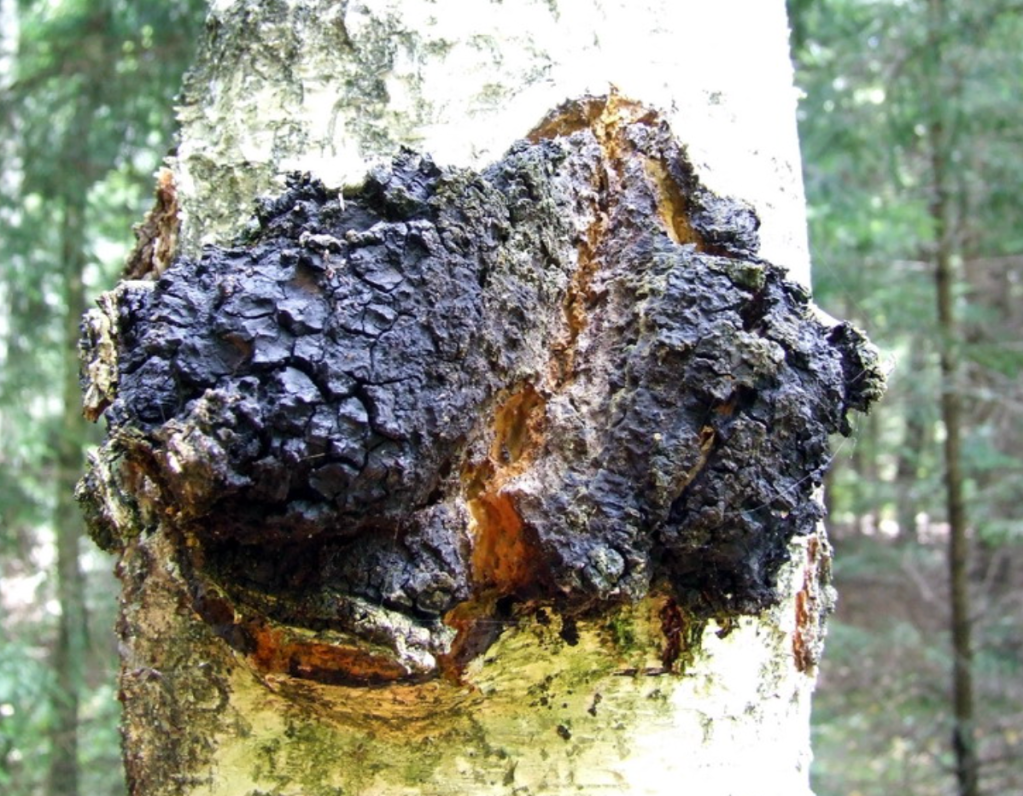
Chaga (Inonotus obliquus) is a unique fungus found in cold, northern forests, growing almost exclusively on birch trees. It doesn’t look like a typical mushroom; instead, it appears as a hard, blackened, crusty mass that resembles a large clump of burnt charcoal. This dark, brittle exterior hides a softer, cork-like interior with a distinct rusty-orange color.
This visible “conk” is actually a sterile mass of fungal mycelium, known as a sclerotium. It is a parasite that slowly draws nutrients from the host tree over many years. Because of this long-term relationship, chaga concentrates beneficial compounds from the birch bark, including betulinic acid, and is exceptionally rich in antioxidants.
Chaga holds a significant place in the traditions of several Northern American Indian tribes, particularly those in the boreal forest regions where it grows. The Cree, Ojibwe (Anishinaabe), Dené, and Gitksan peoples, among others, have well-documented traditional uses for it.
As a Fire-Keeper
One of chaga’s most critical uses was not medicinal but practical. The Ojibwe name shkitagen (or similar variations) relates to its use with fire. The dense, corky interior of chaga doesn’t flame but will hold a smoldering ember for hours, or even days, when properly lit. This made it an invaluable “tinder fungus” for carrying fire from one camp to another, ensuring a fire could be started quickly without friction methods.
As Medicine
Chaga was widely used to make a tea. This tea was traditionally consumed to boost vitality, treat joint pain, and soothe digestive issues. Its anti-inflammatory and antiviral properties were highly valued.
In Ceremony
The smoke from smoldering chaga was also used in ceremonial ways, such as in pipe ceremonies or for smudging, to purify a space or for its spiritual benefits.

Leave a comment